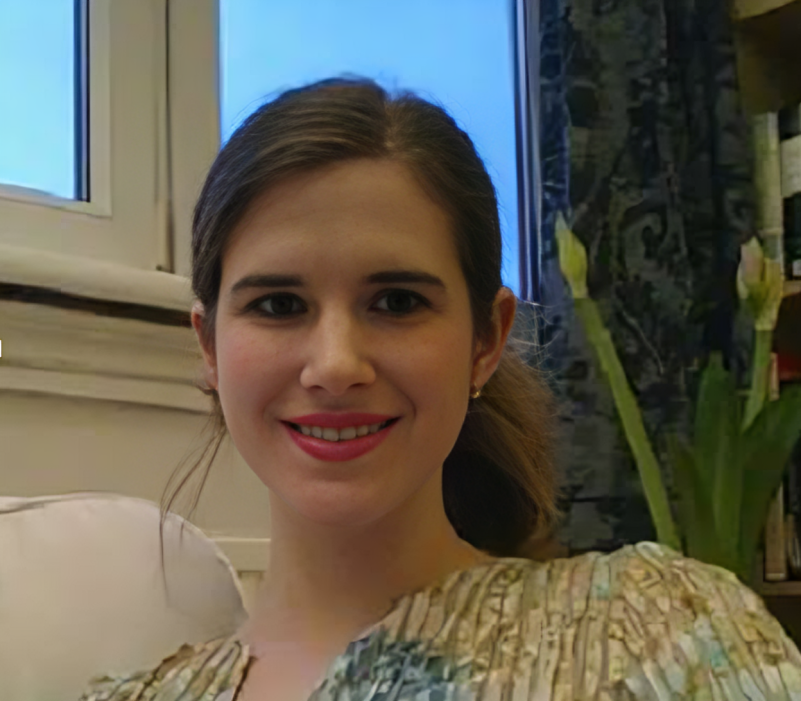
Dr Flore Janssen
Flore Janssen is an assistant professor of comparative literature at Utrecht University, specialised in social and political history and literature of the long nineteenth century. She obtained her PhD in 2018 from Birkbeck, University of London. For her PhD research, titled Women Writers, World Problems, and the Working Poor c.1880-1920: Blackleg Work in Literature, Flore examined the way nineteenth century author-activists Clementina Black and Margaret Harkness portrayed heavily exploited ‘blackleg’ workers in their writings, urging consumers to recognise their struggle and inspire political change.
Flore’s most important advice
You’ve got to make sure that your PhD topic is something you really want to do long-term research on. Pick a topic that you’re happy to spend three or four years of your life on, maybe even longer in some other countries. Even when I was frustrated with things, I loved my topic. I still do, it makes me really happy to revisit the material I was looking at in that period. For some people it really works to join an existing project, for example, where there’s already an outline for what the PhD candidate would be expected to do. Other people already have a project worked out that they know they want to do no matter the circumstances. Find a situation that fits for you. Be flexible, but not in such a way that it doesn’t fit with who you are and what you want.
Don’t take rejection as a reflection on yourself. You are going to have to face a lot of it throughout your academic career; it may start with you sending in your first paper for a conference and they say it doesn’t fit, or sending in your first article for a publication and they tell you “no thank you, not this time.” Especially the postdoc environment, where you send out applications after obtaining your PhD is something you really need to steel yourself for if you want to enter academia. Just the amount of things you will apply for, and the sheer amount of rejection you will get in return. The answer will always be “you’re good, but so are many of the other applicants. We had to choose someone, and that someone isn't you.” It’s a similar experience to applying for student housing, but with your life’s work as the email attachment. This happens to everyone in academia, so don't take it as a rejection of yourself or your scholarship.
Enjoy the moment and be aware of the opportunities you’re given. The most beautiful thing about your PhD is you do have all that time to concentrate on just researching, you can just spend a week in the library and no one is going to stop you. That is a luxury that you’re not likely to have again in your academic career! They say the same thing about doing your PhD defense; it may seem pretty daunting, but I can assure you you will be equipped to do the defense when you get to it. See it as an opportunity to be able to engage in conversation with a group of people who have actually read your work from start to finish; you will probably never be able to have such an in-depth conversation about your own work with fellow academics again. So there’s a lot there that is kind of daunting, and you really want to do it right, but it also gives tremendous opportunities.
The interview (English)
Why did you start with a PhD?
This sounds extremely nerdy, and it is. When I was an undergraduate, my BA degree was in English literature, and in my third year we had a lecture on Marxism and Psychoanalysis from a wonderful, wonderful professor who I still admire very much. He mentioned a letter written to Friedrich Engels by an auteur called Margaret Harkness. In his response he expressed his kind of ideals for what Marxist or socialist literature should do. This letter from Engels has been put into all the collections of Marx and Engels on art and literature, but people knew very little about the woman he wrote it to, after she had sent him a copy of her novel with the question “I want to kind of give an insight into the lives of people in poverty in London, do you think this works?” I remember sitting in this lecture and being told about this nineteenth century female socialist author, knowing that if I ever did my PhD research, she would be the subject.
I did all of my academic studies in the UK, and for me I did my PhD at the same University where I'd done my masters, so I already knew my supervisor. I had a network there. I did take a year between finishing my masters and starting my PhD, so I could get my results from my MA confirmed and I could use them to apply for funding. In that year I had a job in administration at another university literally across the road, where I kept working during my PhD trajectory. I found that job very useful, because it gave me insight into how the university worked from a different perspective.
How did you know a PhD was kind of the right choice for you?
At the time probably didn't quite realize how much of a gamble it was. Most students know the academic job market is a very precarious place, but I don't think they realise quite how precarious it has become; especially because it has gradually been getting worse. When I went into it, I didn't realize what I would be faced with after graduation, although I’ve more or less landed on my feet now and I have a job that I really enjoy. However, even when my situation was precarious, I never regretted doing my PhD. I always loved universities and had the ambition to work in academia. As soon as I arrived at university, I never wanted to leave the university environment and that’s worked out for me.
However, I did get there on a kind of roundabout trajectory. The precarity of the academic job market is also the reason I followed the MA for archival research, because I thought that may have been another possible career path for me. I was lucky enough to get my job here, so it's been a kind of twisty road to get where I am today.
What was it like to study abroad?
For me the choice was fairly obvious. I went to an international school in the Netherlands, so pretty much all of my secondary school education was taught in English. I wanted to study English literature, so it made sense really to go to an anglophone country, the closest of which was England. It helped that I was only 18 so there weren’t really many commitments here that I needed to stay for. The situation is quite different now, because of Brexit and the covid pandemic that happened after I came back. I also still have my network in Britain, so I'm a little bit torn in that sense. I suppose if you go to university anywhere, it’s just a little bit further away. So yes, I think those things that were really relevant to me when I made the choice to come back to the Netherlands were less relevant when I left.
It is a totally different environment, but if you’re able to do that, it's only ever a good thing! The fact that you have international connections, moved around, and can work across borders is something that's valued in academia as well. My study gave me a real international network; I now have friends, acquaintances and colleagues in the USA, Canada, South Africa and Hong Kong that I connected with through academic societies in Britain, so being in that kind of international hub can be really, really stimulating.
What were your main activities during your PhD trajectory?
This is something that really depends on what kind of a writer and thinker you are, and the kinds of things that you learn about yourself. When you do your BA thesis and then when you do your Masters thesis, you learn to figure out how much reading you need to do before you can start writing. You also learn how to make yourself start writing, even though you feel like you’re not equipped to write yet. I am very much an editor, so I do a lot of writing and then rewriting and redrafting.
My Phd was a comparative study of Clementina Black and Margaret Harkness, two professional female writers and activists in the late nineteenth century. So I did a lot of reading, and I spent a lot of time in archives and in libraries. It got to the point where the desk staff of the reading room at the British library didn’t even need to see my card anymore! Finding sources was a lot of work because a lot of Clementina and Margaret’s writing was out of print, or had not yet been identified or perhaps misidentified. A lot of what I did was going to archives to find correspondence, like editions of their works that I could read and go through periodicals for example. I found the overlaps between their fiction writing, journalism and then their campaign activities, and looked at how they used their reputation as authors to create a platform for their activist pursuits.
I ended up cutting quite a bit from my thesis, because you need to catch yourself from going too far down the research rabbit hole. It’s important to know how much time to allocate before you need to pull yourself back from reading, and test whether it’s actually something that’s going somewhere or not. I actually based my recent monograph about nineteenth century consumer activism on a subsection of my PhD research that I had to put aside because it was only a part of what she did. As a book, it made a lot more sense to pursue that line of consumer activism specifically.
I also worked throughout my PhD trajectory, mostly associated with my academic position. I did my PhD full-time and then I had a series of part-time jobs. After I finished my PhD I stayed for another year working in the other university where I was doing administration. Then I was able to take a paid internship with a journal that was being run by some of my professors at the university, and that gave me really valuable editorial experience that I still use to this day. The next internship I did was focused on organizing events for our center for nineteenth century studies, which meant that I got the hang of how to organize events. They were very regular, they would involve academics being invited from lots of different institutions. I made recordings of the talks, edited them and managed the website; I learned to oversee all of those different moving parts, which was a really valuable experience for when I started to organize conferences myself. Towards the last couple years of my PhD I started teaching as well, and I was able to stay on as a teacher for a while at the same university after I had finished. That was a really, really valuable experience too! All of those things happened kind of alongside my PhD and I was attending conferences and I published a couple of articles as well in that time,really trying to make the most of being in a research environment.
The most beautiful thing about your PhD is you do have all that time to concentrate on just sitting, you can just spend a week in the library and no one is going to stop you. That is a luxury that you’re not likely to have again in your academic career! They say the same thing about doing your PhD defense; it may seem pretty daunting, but I can assure you you will be equipped to do the defense when you get to it. See it as an opportunity to be able to engage in conversation with a group of people who have actually read your work from start to finish; you will never be able to have such an in-depth conversation about your own work with fellow academics ever again. So there’s a lot there that is kind of daunting, and you really want to do it right, but it also gives tremendous opportunities.
What was your relation with your PhD supervisor?
I was really lucky in that I already knew my supervisor, because had taught me during my masters. She was interested in many of the same topics and themes that I was interested in, and she was also someone who worked from an international and multilingual perspective. Because my supervisor had the same mode of working as me, it felt really stimulating and nourishing, which is something that I've still tried to keep up. She was a role model for me, and someone who was very easy to catch up with and talk to. We got to know each other really well. I also had a second supervisor, with whom I also had a really good relationship. She was the editor of the journal that I worked for, but it was never necessary to bring her on because the project just went along so well with my first supervisor.
How did you handle the workload for such a long period of time?
It helped that I had a relationship with my supervisor where we held each other accountable, so we met regularly and I submitted work regularly. It can be tricky to keep up if you’re working at the same time you are doing your research, which is the case for a lot of people. Even though it is important and you gain a lot of valuable skills (like teaching), the difficulty is that you are busy with a lot of short term work that gets priority because your PhD research feels like it's just for yourself. It can be difficult to prioritise time for your project when you have someone who’s paying you for your time spent on something else. I did find that difficult on occasion, but it helped that I was working largely in a university environment where everybody considered finishing my PhD a legitimate reason to focus on something beside my job. In other workplaces they may not have been as understanding.
Did your PhD affect your mental health? Were there ways it also helped you grow as a person?
There are definitely periods where it was tough, but I was very lucky in that I had a wonderful network. My PhD was structured so that in the first year me and other students got to know each other as a cohort, we had sort of weekly sessions together and it meant that I knew a really great group of people who were in a similar position to me. We had a little office that we shared, and you could have a nice chat or a coffee with whoever you found there. We also did writing sessions together; someone would book a room in the university where we would set a timer and we’d all hold each other accountable to write until it went off. Then, we could have a coffee, have a chat and when the timer would go again we’d continue writing, take a break, repeat. Having a community really meant a lot to me.
I also just loved my research all the way through. What was tricky for me was I was partially funded, so I had my tuition fees covered, but I didn't have a stipend which was also why I ended up working - London is an expensive city! The stress of time pressure or your financial position can get to you, which is definitely something to bear in mind when you’re making such a long commitment. I was lucky in the sense that it never got too bad, partially because I had my community. I always felt supported throughout my PhD, which really made the difference.
What comes after a PhD? How easy was it to find a job or a postdoc after you did your PhD?
I found it very tough. I remember the PhD trajectory itself as a wonderful time, with its ups and downs. It’s the period afterwards when you’re trying to work out what to do next, that can really get you down. People talk about it like falling off a cliff; when you’ve spent three or four years on this one thing, you have your defense, you get your degree, you celebrate - and then what? I was lucky in that there was postdoctoral funding available that I applied for and was granted while finishing my PhD, so I had a soft landing in that regard. I had six more months that I could continue to develop my research while I continued to teach. After that I managed to get a job in the archive where I’d also done research during my PhD. It was quite a small archive with a quite tight-knit staff community, which I got to know quite well.
At the same time I continued sending out applications, and this is something you really need to steel yourself for if you want to enter academia. Just the amount of things you will apply for, and the sheer amount of rejection you will get in return. The answer will always be ‘you’re good, but so are many of the other applicants. We had to choose someone, and that someone isn't you.’ It’s a similar experience to applying for student housing, but with your life’s work as the email attachment.
I was very lucky to get the job in the archive while my applications didn't really lead to anything. I signed up for my archival Masters to qualify as an archivist, and that is when the pandemic happened. I actually lost my job in the pandemic because they were cancelling short-term contracts, which worked out well because it meant that I was able to do my archival masters full time. Then my application at Utrecht University was accepted, and I was able to start the job just after I'd completed my archival masters. I was all set to go and work in archives, and then I happened to find my way back into Academia. I would conclude that a lot of it is just being in the right place at the right time, and also that you probably only need to be lucky once. You’ll be unlucky lots of times but all it takes is one opportunity that works out. I've been really happy with where I've ended up, so there’s a happy ending to my story!
Should you do a PhD directly after your studies, or would you recommend having some experience in the work field as well?
That really depends on what you want to do. I think it always really helps to make a realistic assessment of your own situation; your financial situation is of course very important, but also other commitments that you might have, other demands on your time. What kind of person are you, what else do you want to spend your time on, what can or can’t you cope with? These are also really legitimate concerns! I myself took a gap year to work between my MA and PhD, but just couldn't wait to get back to researching; I would go to the library in the evenings after work to prepare my proposal And that was the only thing I really wanted to do at that time.
However, I also tried to not put all my eggs in one basket; that job in administration really helped me when I went into a full-time academic job, because there’s nothing you can tell me now about a virtual learning environment that I don't already know from setting them up for other academics. I learned to organize events, edit texts, to do some web and sound editing, all of those kinds of extra things that you can use for something else. All of the things that you learn in an office job are gonna come back in your life, whether you follow an academic or non-academic career path. A lot of my friends who work part-time in academia also do things like editorial work and make some money that way. My point isn’t to work an office job per se, but to gain a skill set that can help you beyond just your studies.
However, you never know how your experience will be assessed. I have also been to application workshops where it would almost be considered a disadvantage if you weren’t able to show that you would only follow an academic career, so it also depends a little bit on what kind of place you’re trying to get into. If you have your heart set on getting into a specific academic environment, work out what they want from you. There is also the horrible situation where you apply for a job somewhere else, and you’re told that you’re overqualified because of all the stuff that you’ve done, that has also happened to me! There are just some things that you can prepare for, and there is just an awful lot that you also just don't know. In the end, being open to trying new things is always really, really helpful.
If you knew what you were in for, would you have Know how you work! That’s really crucial throughout your academic career. It means not beating yourself up over the days where you seem to be unable to get anything done and you keep trying to force something on the page, just to feel worse about yourself. Sometimes you’re just not ready, sometimes something needs to shift; maybe take a walk or a break and take a look at it again after you come back. You also need to know when you do need to give yourself a shove. Are you procrastinating because you haven’t figured out what to do next? In that case, work out how you’re going to get there, or are you procrastinating because you’re just procrastinating and do you just need to tell yourself to get over it. I think that is my best advice, because then you also don't waste lots of energy and time feeling guilty about not doing the thing someone else has told you or that you’re telling yourself you need to be doing. But also recognize when you are making excuses, because we all do that sometimes. It’s only human to do so! Sometimes you just need a coffee or a walk, but there are other times when you’re in a situation where you’ve got two or three hours to get something finished, and if you spend an hour procrastinating you’re not going to get that time back.
The interview (English)
Why did you start with a PhD?
This sounds extremely nerdy, and it is. When I was an undergraduate, my BA degree was in English literature, and in my third year we had a lecture on Marxism and Psychoanalysis from a wonderful, wonderful professor who I still admire very much. He mentioned a letter written to Friedrich Engels by an author called Margaret Harkness. In his response he expressed his kind of ideals for what Marxist or socialist literature should do. This letter from Engels has been put into all the collections of Marx and Engels on art and literature, but people knew very little about the woman he wrote it to, after she had sent him a copy of her novel with the question “I want to kind of give an insight into the lives of people in poverty in London, do you think this works?” I remember sitting in this lecture and being told about this nineteenth century female socialist author, knowing that if I ever did my PhD research, she would be the subject.
I did all of my academic studies in the UK, and for me I did my PhD at the same University where I'd done my masters, so I already knew my supervisor. I had a network there. I did take a year between finishing my masters and starting my PhD, so I could get my results from my MA confirmed and I could use them to apply for funding. In that year I had a job in administration at another university literally across the road, where I kept working during my PhD trajectory. I found that job very useful, because it gave me insight into how the university worked from a different perspective.
How did you know a PhD was kind of the right choice for you?
At the time I probably didn't quite realize how much of a gamble it was. Most students know the academic job market is a very precarious place, but I don't think they realise quite how precarious it has become; especially because it has gradually been getting worse. When I went into it, I didn't realize what I would be faced with after graduation, although I’ve more or less landed on my feet now and I have a job that I really enjoy. However, even when my situation was precarious, I never regretted doing my PhD. I always loved universities and had the ambition to work in academia. As soon as I arrived at university, I never wanted to leave the university environment and that’s worked out for me.
However, I did get there on a kind of roundabout trajectory. The precarity of the academic job market is also the reason I followed the MA for archival research [MA in Archives and Records Management, UCL], because I thought that may have been another possible career path for me. I was lucky enough to get my job here, so it's been a kind of twisty road to get where I am today.
What was it like to study abroad?
For me the choice was fairly obvious. I went to an international school in the Netherlands, so pretty much all of my secondary school education was taught in English. I wanted to study English literature, so it made sense really to go to an Anglophone country, the closest of which was England. It helped that I was only 18 so there weren’t really many commitments here that I needed to stay for. The situation is quite different now, because of Brexit and the covid pandemic t I also still have my network in Britain, so I'm a little bit torn in that sense. I suppose if you go to university anywhere, it’s just a little bit further away. So yes, I think those things that were really relevant to me when I made the choice to come back to the Netherlands were less relevant when I left.
It is a totally different environment, but if you’re able to do that, it's only ever a good thing! The fact that you have international connections, moved around, and can work across borders is something that's valued in academia as well. My study gave me a real international network; I now have friends, acquaintances and colleagues in the USA, Canada, South Africa and Hong Kong that I connected with through academic societies in Britain, so being in that kind of international hub can be really, really stimulating.
What were your main activities during your PhD trajectory?
This is something that really depends on what kind of a writer and thinker you are, and the kinds of things that you learn about yourself. When you do your BA thesis and then when you do your Masters thesis, you learn to figure out how much reading you need to do before you can start writing. You also learn how to make yourself start writing, even though you feel like you’re not equipped to write yet. I am very much an editor, so I do a lot of writing and then rewriting and redrafting.
My PhD was a comparative study of Clementina Black and Margaret Harkness, two professional female writers and activists in the late nineteenth century. So I did a lot of reading, and I spent a lot of time in archives and in libraries. It got to the point where the desk staff of the reading room at the British Library didn’t even need to see my card anymore! Finding sources was a lot of work because a lot of Clementina and Margaret’s writing was out of print, or had not yet been identified or perhaps misidentified. A lot of what I did was going to archives to find correspondence, like editions of their works that I could read and go through periodicals for example. I found the overlaps between their fiction writing, journalism and then their campaign activities, and looked at how they used their reputation as authors to create a platform for their activist pursuits.
I ended up cutting quite a bit from my thesis, because you need to catch yourself from going too far down the research rabbit hole. It’s important to know how much time to allocate before you need to pull yourself back from reading, and test whether it’s actually something that’s going somewhere or not. I actually based my recent monograph about nineteenth century consumer activism on a subsection of my PhD research that I had to put aside because it was only a part of what she [Black] did. As a book, it made a lot more sense to pursue that line of consumer activism specifically.
I also worked throughout my PhD trajectory, mostly associated with my academic position. I did my PhD full-time and then I had a series of part-time jobs. During the first year of my PhD I did work for the other university, where I was doing administration. Then I was able to take a paid internship with a journal that was being run by some of my professors at the university, and that gave me really valuable editorial experience that I still use to this day. The next internship I did was focused on organizing events for our center for nineteenth century studies, which meant that I got the hang of how to organize events. They were very regular, they would involve academics being invited from lots of different institutions. I made recordings of the talks, edited them and managed the website; I learned to oversee all of those different moving parts, which was a really valuable experience for when I started to organize conferences myself. Towards the last couple years of my PhD I started teaching as well, and I was able to stay on as a teacher for a while at the same university after I had finished. That was a really, really valuable experience too! All of those things happened kind of alongside my PhD and I was attending conferences and I published a couple of articles as well in that time, really trying to make the most of being in a research environment.
The most beautiful thing about your PhD is you do have all that time to concentrate on just sitting, you can just spend a week in the library and no one is going to stop you. That is a luxury that you’re not likely to have again in your academic career! They say the same thing about doing your PhD defense; it may seem pretty daunting, but I can assure you you will be equipped to do the defense when you get to it. See it as an opportunity to be able to engage in conversation with a group of people who have actually read your work from start to finish; you will never be able to have such an in-depth conversation about your own work with fellow academics ever again. So there’s a lot there that is kind of daunting, and you really want to do it right, but it also gives tremendous opportunities.
What was your relation with your PhD supervisor?
I was really lucky in that I already knew my supervisor, because she had taught me during my masters. She was interested in many of the same topics and themes that I was interested in, and she was also someone who worked from an international and multilingual perspective. Because my supervisor had the same mode of working as me, it felt really stimulating and nourishing, which is something that I've still tried to keep up. She was a role model for me, and someone who was very easy to catch up with and talk to. We got to know each other really well. I also had a second supervisor, with whom I also had a really good relationship. She was the editor of the journal that I worked for, but it was never necessary to bring her in because the project just went along so well with my first supervisor.
How did you handle the workload for such a long period of time?
It helped that I had a relationship with my supervisor where we held each other accountable, so we met regularly and I submitted work regularly. It can be tricky to keep up if you’re working at the same time you are doing your research, which is the case for a lot of people. Even though it is important and you gain a lot of valuable skills (like teaching), the difficulty is that you are busy with a lot of short term work that gets priority because your PhD research feels like it's just for yourself. It can be difficult to prioritise time for your project when you have someone who’s paying you for your time spent on something else. I did find that difficult on occasion, but it helped that I was working largely in a university environment where everybody considered finishing my PhD a legitimate reason to focus on something beside my job. In other workplaces they may not have been as understanding.
Did your PhD affect your mental health? Were there ways it also helped you grow as a person?
There are definitely periods where it was tough, but I was very lucky in that I had a wonderful network. My PhD was structured so that in the first year me and other students got to know each other as a cohort, we had sort of weekly sessions together and it meant that I knew a really great group of people who were in a similar position to me. We had a little office that we shared, and you could have a nice chat or a coffee with whoever you found there. We also did writing sessions together; someone would book a room in the university where we would set a timer and we’d all hold each other accountable to write until it went off. Then, we could have a coffee, have a chat and when the timer would go again we’d continue writing, take a break, repeat. Having a community really meant a lot to me.
I also just loved my research all the way through. What was tricky for me was I was partially funded, so I had my tuition fees covered, but I didn't have a stipend which was also why I ended up working - London is an expensive city! The stress of time pressure or your financial position can get to you, which is definitely something to bear in mind when you’re making such a long commitment. I was lucky in the sense that it never got too bad, partially because I had my community. I always felt supported throughout my PhD, which really made the difference.
What comes after a PhD? How easy was it to find a job or a postdoc after you did your PhD?
I found it very tough. I remember the PhD trajectory itself as a wonderful time, with its ups and downs. It’s the period afterwards when you’re trying to work out what to do next, that can really get you down. People talk about it like falling off a cliff; when you’ve spent three or four years on this one thing, you have your defense, you get your degree, you celebrate - and then what? I was lucky in that there was postdoctoral funding available that I applied for and was granted while finishing my PhD, so I had a soft landing in that regard. I had six more months that I could continue to develop my research while I continued to teach. After that I managed to get a job in the archive where I’d also done research during my PhD. It was quite a small archive with a quite tight-knit staff community, which I got to know quite well.
At the same time I continued sending out applications, and this is something you really need to steel yourself for if you want to enter academia. Just the amount of things you will apply for, and the sheer amount of rejection you will get in return. The answer will always be ‘you’re good, but so are many of the other applicants. We had to choose someone, and that someone isn't you.’ It’s a similar experience to applying for student housing, but with your life’s work as the email attachment.
I was very lucky to get the job in the archive while my applications didn't really lead to anything. I signed up for my archival Masters to qualify as an archivist, and that is when the pandemic happened. I actually lost my job in the pandemic because they were cancelling short-term contracts, which worked out well because it meant that I was able to do my archival masters full time. Then my application at Utrecht University was accepted, and I was able to start the job just after I'd completed my archival masters. I was all set to go and work in archives, and then I happened to find my way back into Academia. I would conclude that a lot of it is just being in the right place at the right time, and also that you probably only need to be lucky once. You’ll be unlucky lots of times but all it takes is one opportunity that works out. I've been really happy with where I've ended up, so there’s a happy ending to my story!
Should you do a PhD directly after your studies, or would you recommend having some experience in the work field as well?
That really depends on what you want to do. I think it always really helps to make a realistic assessment of your own situation; your financial situation is of course very important, but also other commitments that you might have, other demands on your time. What kind of person are you, what else do you want to spend your time on, what can or can’t you cope with? These are also really legitimate concerns! I myself took a gap year to work between my MA and PhD, but just couldn't wait to get back to researching; I would go to the library in the evenings after work to prepare my proposal And that was the only thing I really wanted to do at that time.
However, I also tried to not put all my eggs in one basket; that job in administration really helped me when I went into a full-time academic job, because there’s nothing you can tell me now about a virtual learning environment that I don't already know from setting them up for other academics. I learned to organize events, edit texts, to do some web and sound editing, all of those kinds of extra things that you can use for something else. All of the things that you learn in an office job are going to come back in your life, whether you follow an academic or non-academic career path. A lot of my friends who work part-time in academia also do things like editorial work and make some money that way. My point isn’t to work an office job per se, but to gain a skill set that can help you beyond just your studies.
However, you never know how your experience will be assessed. I have also been to application workshops where it would almost be considered a disadvantage if you weren’t able to show that you would only follow an academic career, so it also depends a little bit on what kind of place you’re trying to get into. If you have your heart set on getting into a specific academic environment, work out what they want from you. There is also the horrible situation where you apply for a job somewhere else, and you’re told that you’re overqualified because of all the stuff that you’ve done, that has also happened to me! There are just some things that you can prepare for, and there is just an awful lot that you also just don't know. In the end, being open to trying new things is always really, really helpful.
If you knew what you were in for, would you have done it again?
Like I've said, I've never regretted doing my PhD. If I'd known more, I might have planned things a bit differently. However, that’s the issue with developments in academia; the people advising you at the start of your career will have had a different experience than you will face yourself. They’re not always necessarily able to advise you on the best way to navigate the state of academia as it is right now. I think that’s probably a perennial problem, but one that has become more pronounced as academia turned into a more and more precarious environment.
There’s only so much you can plan for; you never know what’s going to happen. What helped me was the knowledge that I wasn't investing everything in just one career path. Of course, if you’re going to do a PhD full time, you will be taking a big chunk of time out of your life that other people will use to build other kinds of careers. There is always going to be that situation where you might feel that you’re a bit behind.
Always listen to advice from other people, but remember that you don't have to take all the advice that they give you. Find the people whose feedback matters to you and get their opinion. This applies for job applications, but also for things like peer reviews. You don’t have to do everything that the peer reviewers tell you. If you can make a good case for the choices you made, then you can also stick to your own ideas and priorities. You don't have to go along with everything everyone says, but get as much advice as possible.
Studying abroad can help you build an international network. It takes some time getting used to a totally different environment and it may not be for everyone, but if you’re able to do that, it's only ever a good thing! The fact that you have international connections, moved around, and can work across borders is something that's valued in academia as well. My studies gave me a real international network; I now have friends, acquaintances and colleagues in places including the USA, Canada, South Africa and Hong Kong that I connected with through academic societies in Britain, so being in that kind of international hub can be really, really stimulating.
Know how you work! That’s really crucial throughout your academic career. It means not beating yourself up over the days where you seem to be unable to get anything done and you keep trying to force something on the page, just to feel worse about yourself. Sometimes you’re just not ready, sometimes something needs to shift; maybe take a walk or a break and take a look at it again after you come back. You also need to know when you do need to give yourself a shove. Are you procrastinating because you haven’t figured out what to do next? In that case, work out how you’re going to get there, or are you procrastinating because you’re just procrastinating and do you just need to tell yourself to get over it. I think that is my best advice, because then you also don't waste lots of energy and time feeling guilty about not doing the thing someone else has told you or that you’re telling yourself you need to be doing. But also recognize when you are making excuses, because we all do that sometimes. It’s only human to do so! Sometimes you just need a coffee or a walk, but there are other times when you’re in a situation where you’ve got two or three hours to get something finished, and if you spend an hour procrastinating you’re not going to get that time back.